

If you are wondering about investing in real estate, the most effective methods include purchasing physical rental properties for passive cash flow, buying shares in Real Estate Investment Trusts (REITs), utilizing digital crowdfunding platforms for fractional ownership, or participating in strategic off-plan property flipping.
The global financial landscape is undergoing a permanent structural shift. For astute wealth managers, family offices, and expatriates in the United Arab Emirates, property remains the ultimate tangible hedge against inflation and economic volatility. While mastering the local market offers unparalleled stability and tax-free yields, true visionary investors are consistently looking beyond their immediate borders. By understanding the rigorous mechanics and regulatory frameworks of property acquisition in the emirates, investors can unlock the explosive, early-stage growth currently transforming the Kingdom of Saudi Arabia. This comprehensive, commercial-grade guide from Amaal Company will explain how to invest in real estate strategically, evaluating mature asset classes while highlighting the massive cross-border opportunities awaiting savvy GCC investors.
The Core Principles: how to invest in real estate Effectively
Understanding investing in real estate requires a fundamental shift from emotional purchasing to data-driven commercial analysis. Property is not merely bricks and mortar; it is a sophisticated financial vehicle designed for long-term wealth preservation and generational equity building. To succeed, you must approach the market with the mindset of an institutional fund manager.
Identifying Your Primary Investment Vehicle
- Direct Physical Ownership (Buy-to-Let): This involves acquiring tangible assets such as luxury waterfront villas or mid-market suburban apartments for long-term capital appreciation and consistent monthly rental yields. It offers the highest level of control over your capital and allows you to utilize bank leverage (mortgages) safely.
- REITs (Real Estate Investment Trusts): For those asking, “how can i invest in real estate without the operational friction of managing tenants or property maintenance?”, REITs offer highly liquid shares in large-scale commercial portfolios. These trusts operate income-producing real estate and are traded directly on major financial exchanges, providing regular dividend payouts.
- PropTech and Crowdfunding: A highly modern approach to how to invest in real estate, allowing retail investors to pool their capital to acquire high-value assets fractionally. This dramatically lowers the barrier to entry, allowing investors to diversify their capital across multiple properties rather than tying it all into a single down payment.
- Strategic Flipping and Off-Plan Trading: This advanced method involves purchasing properties at below-market rates during their initial launch phase, holding the contract as the physical structure is built, and selling the asset at a premium before the final handover and payment milestones are due.
Learning how to invest in real estate effectively means understanding which of these specialized vehicles aligns perfectly with your immediate liquidity needs, long-term financial goals, and personal risk tolerance.

Leveraging dubai investment properties for Portfolio Stability
Before expanding a portfolio regionally, it is absolutely vital to analyze and learn from the mature, highly regulated frameworks of the UAE. The market for dubai investment properties is globally renowned for its exceptional tax-free environment, robust regulatory oversight, and world-class civic infrastructure.
The Commercial Benefits of a Mature Market
- Exceptional Rental Yields: The residential sector consistently delivers impressive gross yields ranging from 6% to 8%. When compared to the 2% or 3% yields found in major European capitals, the UAE provides a flawless blueprint for how to invest in real estate for pure, unadulterated cash flow.
- Tax-Free Wealth Generation: The complete absence of recurring annual property taxes, capital gains taxes, and income taxes on residential leasing means that your wealth compounds at a significantly accelerated rate.
- Regulatory Transparency: The mandatory use of government-monitored escrow accounts ensures that acquiring dubai investment properties is a highly secure, well-regulated process. This framework completely insulates buyer capital from developer insolvency risks, ensuring funds are only released upon verified construction milestones.
- Immigration Incentives: The region has successfully linked property acquisition with long-term residency. By purchasing assets meeting specific financial thresholds (such as AED 2 million), investors can secure a 10-year Golden Visa, transforming a standard financial transaction into a holistic lifestyle upgrade.
Mastering the deep structural dynamics of the UAE property sector provides investors with the sharp analytical skills and due diligence habits needed to evaluate emerging, high-growth markets accurately.
Amal team provides guidance to help you choose the perfect property 🏠
The Strategic Pivot: Expanding from the UAE to Saudi Arabia
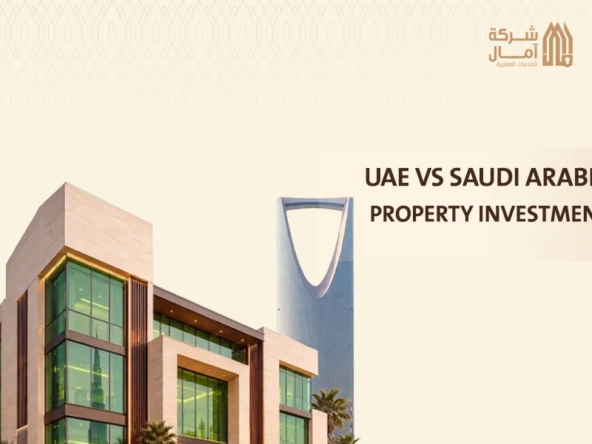
Once an investor fully understands how to invest in real estate within a mature, stabilized environment like the emirates, the next logical commercial step is capturing high-alpha growth. The Saudi real estate sector, fiercely driven by the visionary mandates of Vision 2030, represents an unprecedented generational wealth opportunity that regional investors cannot afford to ignore.
Why Visionary Emirati Investors are Looking at Saudi Arabia
- Early-Stage Capital Appreciation: While the UAE offers steady, predictable yields, Saudi Arabia is currently experiencing massive, historic infrastructure expansion. The influx of multinational corporations setting up regional headquarters in Riyadh is driving an immense population boom. This dynamic offers explosive early-stage equity growth that perfectly mimics the rapid rise of the emirates two decades ago.
- Progressive Regulatory Reforms: The Kingdom’s updated foreign ownership laws and highly attractive Premium Residency programs make it easier than ever for sophisticated regional capital to enter the market. The government is actively streamlining the process for international investors to acquire both commercial and residential assets.
For Emirati investors, institutional funds, and family offices asking “how can i invest in real estate across borders safely and legally while mitigating systemic risks?”, the answer lies entirely in partnering with elite local experts who understand both market mentalities. This is exactly where Amaal provides unparalleled, cross-border value.
How Amaal Empowers Your Regional Expansion
As a premier real estate powerhouse deeply rooted in the booming Saudi market, we serve as the ultimate operational bridge for UAE-based investors.
- We recognize and deeply respect the high institutional standards, regulatory transparency, and data-driven reporting you expect from your property transactions.
- Whether you are actively searching for high-yield commercial assets, logistical hubs, or premium residential units in the heart of Riyadh, Amaal offers comprehensive real estate brokerage, flawless property management, and data-driven project marketing.
- By partnering with us, you can seamlessly apply the sophisticated knowledge of how to invest in real estate that you acquired in the UAE directly to the rapidly expanding Saudi economy.
- We navigate the local Ministry of Investment (MISA) regulations on your behalf, ensuring your capital remains secure, legally compliant, and highly profitable in this new frontier.

Actionable Steps: how to invest in real estate with Precision
Navigating any international property market requires a meticulous, step-by-step approach. If you are actively researching about investing in real estate, follow this rigorous commercial blueprint to mitigate risk and maximize your Return on Investment (ROI).
Phase 1: Strategic Capital Allocation and Auditing
- Financial Auditing: Determine your exact liquidity profile. Are you a cash buyer, or will you leverage mortgage financing? In the UAE, expatriates generally require a 20% down payment, a standard that helps gauge regional financing norms. Ensure you factor in purchasing costs, such as the 4% land department transfer fees and standard agency commissions, so your liquidity is never unexpectedly squeezed.
- Macro-Market Analysis: Never rely on emotional speculation or marketing brochures. Rigorously analyze historical pricing data, upcoming transit developments (like new metro lines), and neighborhood demographics. An area with new schools, hospitals, and retail centers will invariably guarantee long-term tenant demand.
Phase 2: Executing the Acquisition Flawlessly
- Strict Due Diligence: When considering how to invest in real estate, always verify the developer’s historical track record regarding timely handovers and structural build quality. An unproven developer offering steep discounts often carries hidden operational risks.
- Contractual Mastery: Understanding complex legal frameworks, such as the Sales and Purchase Agreement (SPA) and interim title deeds (Oqood for off-plan properties), is a non-negotiable, critical aspect of how to invest in real estate successfully. Ensure penalty clauses for construction delays are clearly defined.
Phase 3: Post-Acquisition Management and Exit Strategy
- Yield Optimization: Decide between long-term annual leases (which offer stability) or short-term holiday rentals (which require more management but often yield 20% higher returns).
- Exit Timing: Knowing when to sell is just as important as knowing what to buy. Track market cycles closely, and plan your exit strategy based on specific equity targets rather than holding an asset indefinitely without purpose.
Amal team provides guidance to help you choose the perfect property 🏠
Frequently Asked Questions (FAQs)
How can a beginner invest in real estate?
A beginner should start by thoroughly educating themselves on macroeconomic market fundamentals and identifying their personal risk tolerance. The absolute easiest entry point is often through Real Estate Investment Trusts (REITs) or fractional crowdfunding platforms, which require significantly lower initial capital and involve zero tenant management or physical maintenance. For those desiring physical assets, purchasing a smaller, affordable off-plan apartment with a highly flexible, interest-free developer payment plan is a highly strategic and secure way to learn the mechanics of the market without overwhelming capital exposure.
How to invest $500 AED in UAE?
While direct physical property acquisitions require substantial capital reserves, you can easily utilize digital PropTech and government-regulated crowdfunding platforms. These innovative applications allow retail investors to purchase fractional digital shares of high-yield rental properties across the city. This micro-investing model is the perfect, modernized answer for those asking “how can i invest in real estate with extremely limited funds?”, providing proportional monthly rental dividends and a direct share of the asset’s long-term capital appreciation upon its eventual sale.
Which is the best way to invest in real estate?
The “best” and most efficient method depends entirely on your commercial intent, available liquidity, and time horizon. For maximum control, high capital appreciation, and unparalleled tax advantages, the direct ownership of physical properties (the traditional buy-to-let model) remains the undisputed gold standard of wealth generation. However, for institutional investors seeking pure passive income, high liquidity, and instant portfolio diversification without the operational friction of property management, REITs represent an incredibly powerful and hassle-free alternative.
How much money do I need to invest to make $3,000 a month?
To generate a reliable, passive income stream of $3,000 (approximately AED 11,000) per month, you must calculate your acquisition based on average net rental yields. If a specific property market averages a solid 6% net annual yield (after all service charges, maintenance, and management fees are fully deducted), you would need to invest roughly $600,000 (approximately AED 2.2 million) in cash-flowing assets. Understanding these fundamental gross-versus-net yield calculations is the absolute core of how to invest in real estate for long-term financial independence.
Mastering the intricate details of how to invest in real estate is the defining characteristic of sophisticated global wealth managers. By analyzing mature, highly regulated environments like the UAE, investors can systematically build a resilient portfolio that generates tax-free, passive income while hedging against global inflation.
However, the true masters of capital do not limit their vision or their wealth to a single geography. By applying the analytical rigor and due diligence learned in the highly competitive UAE landscape, investors can confidently capture the monumental, transformative growth currently unfolding in Saudi Arabia. We invite visionary Emirati investors and expatriates to take the next strategic leap in their wealth-generation journey.
Know more about Real estate in Dubai